

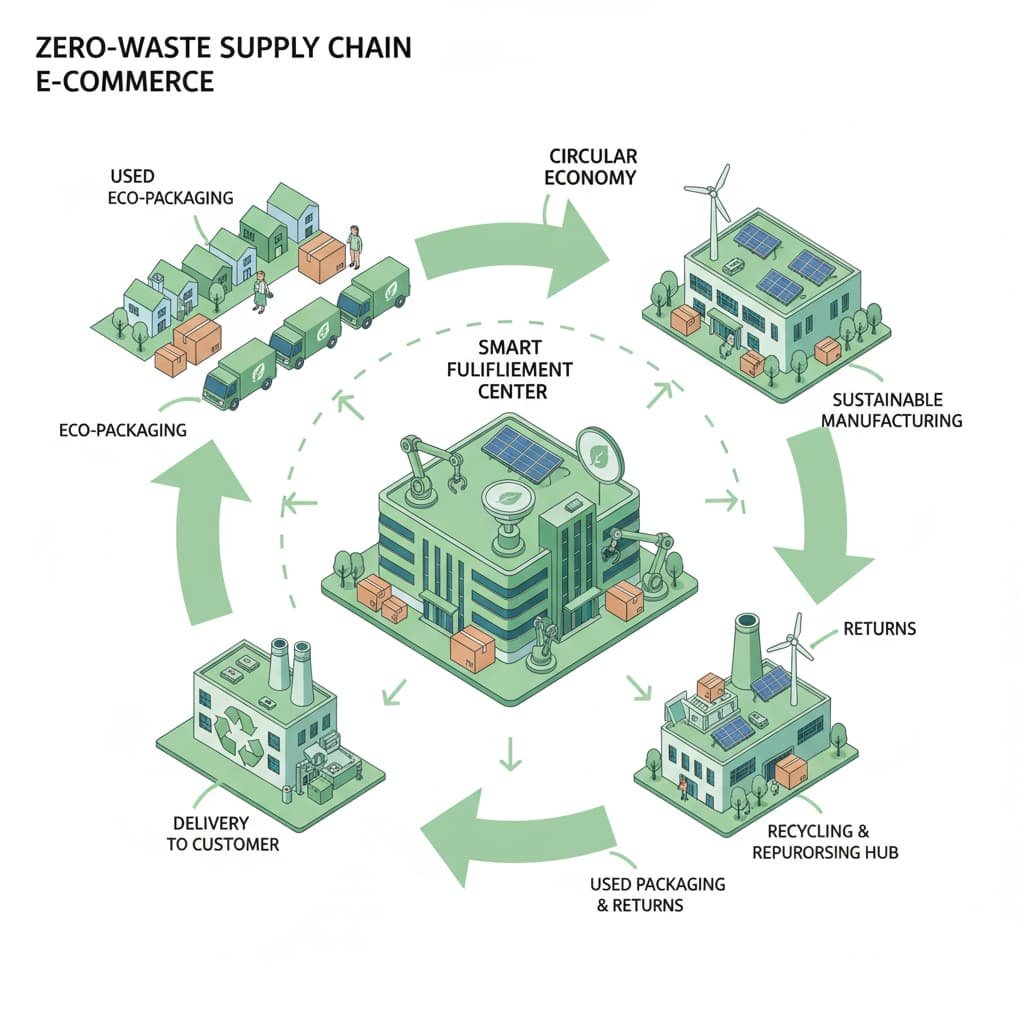
A zero-waste supply chain for e-commerce is no longer a choice, but a necessity, as online retail contributes to a staggering amount of packaging, logistical, and inventory waste.
The new world of e-commerce is one built on speed: fast delivery, constant restocking, and endless packaging.
The bad news is that waste grows exponentially in each step of the supply chain.
Cardboard boxes accumulate in landfills. Plastic packaging materials overwhelm landfills. Unsold products end up being destroyed in reverse logistics.
According to Oceana (2024), the e-commerce industry produced 3.8 billion pounds of plastic packaging waste in 2022 alone, with forecasts showing that global e-commerce packaging waste is growing at a 9.1% CAGR, set to nearly double by 2033.[1].
What does this mean to online businesses?There are three main threats to online businesses in this scenario:
● Increased logistics costs
● Increased regulatory burden on packaging
● Increased customer expectation on sustainability
Customers are paying attention to these issues. A report released by McKinsey & Company in 2024 revealed that 78% of consumers prefer to do business with companies that have visible sustainability practices[2].
The solution to these challenges is a circular logistics model for online retail, specifically a zero-waste supply chain.
Not marketing or greenwashing.
The solution lies in the structural design of the supply chain.This guide will walk you through the 7-step process used by top digital retailers to achieve zero-waste supply chain management.
The Circular Economy Model: Defining Zero-Waste E-commerce Logistics.
A zero-waste strategy for e-commerce supply chains is a method of operation for the supply chain in which nothing ever goes to landfill during the life of a product. It involves all phases, from sourcing of the raw materials to manufacturing, packaging, storage, transportation, and handling of returns.
The goal is
to leave nothing behind, to send nothing to landfill
instead, reuse, recycle, compost, or re-enter the materials back into the system for further production.
This is a philosophical stance that relies on the principles of the Circular Economy, as advocated for by the Ellen MacArthur Foundation.
Why waste appears in online retail?
To solve the system, you need to understand where the waste is coming from in the system in the first place.
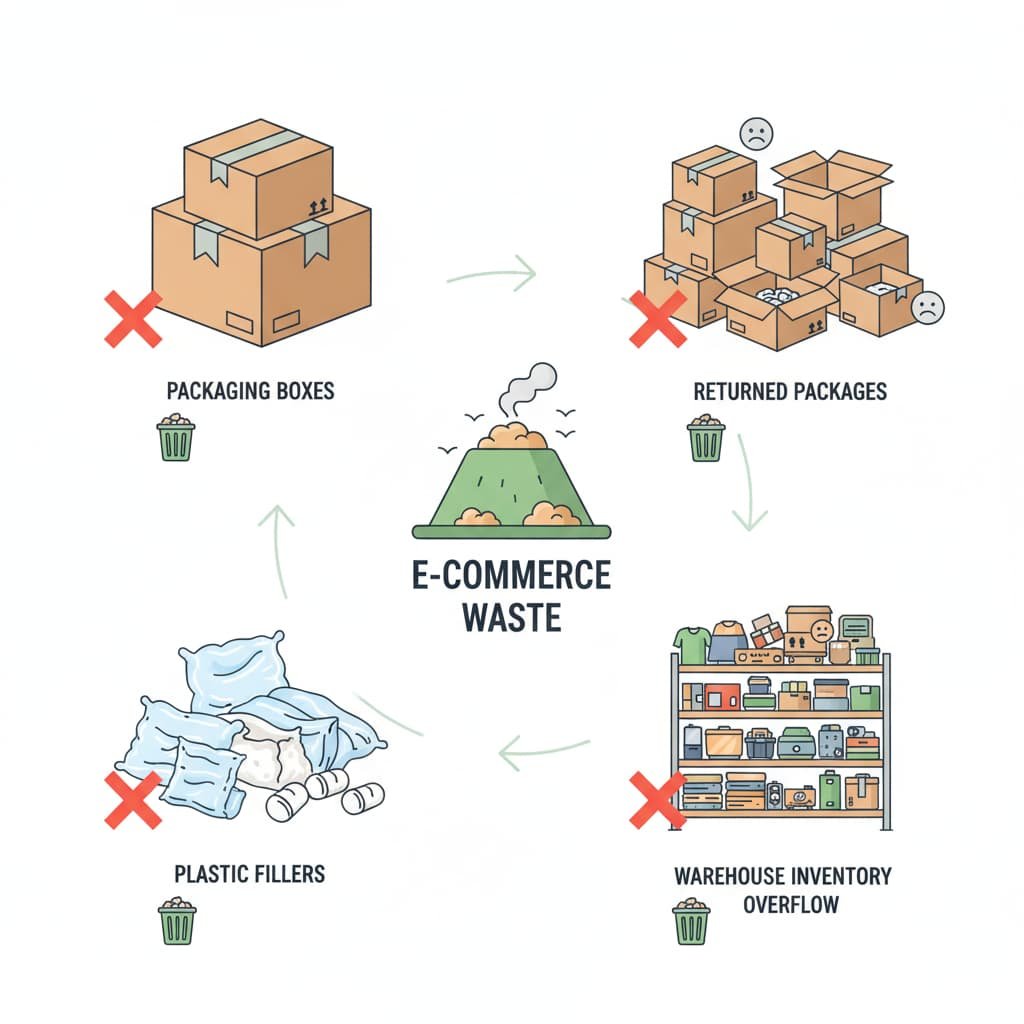
For a typical online retail system, waste appears in four main locations:
1) Excessive packaging to prevent claims for damage during transit.
2) Poor inventory management, where unsold products are destroyed rather than being sold again.
3) Inefficient order fulfillment, where handling multiple warehouses causes duplication of packaging.
4) The issue of returns, which contributes to 5 billion pounds of landfill waste annually.
These inefficiencies are not only bad for the environment, they also make a zero-waste e-commerce system, which is good for the environment, also good for the bottom line.
7 Practical Steps for a Zero-Waste Supply Chain for E-commerce.
1: Start Packaging from Scratch.

The first step in developing a zero-waste approach to e-commerce is to recognize the main contributor to waste: packaging.
A zero-waste approach to packaging means compostable materials, minimal design, and the use of reuseable packaging containers. Think about what Loop Industries has done in developing reuseable containers.
Best practices to keep in mind: use single-material packaging, replace plastic bubble wrap with paper padding, and design reuseable containers to ship products in.
The EPA indicates that by cutting back on packaging materials, 30 to 40 percent less waste can be generated[3].
2: Shift to Demand-Driven Manufacturing.
Traditional brick-and-mortar retailers use forecasts to determine production levels, which means we end up generating more products than we need: waste.
A better approach to manufacturing is to use a more cutting-edge approach: demand-driven manufacturing or made-to-order manufacturing. Companies like Nike are already using predictive analytics to minimize unsold inventory.
Best practices to keep in mind: use AI to improve demand prediction, use dynamic stock allocation, and use limited batch production to minimize waste.
Demand-driven manufacturing is one of the most powerful tools available to us to develop a zero-waste approach to the supply chain.
3: Localize and Optimize Eco-Friendly Fulfillment Hubs.
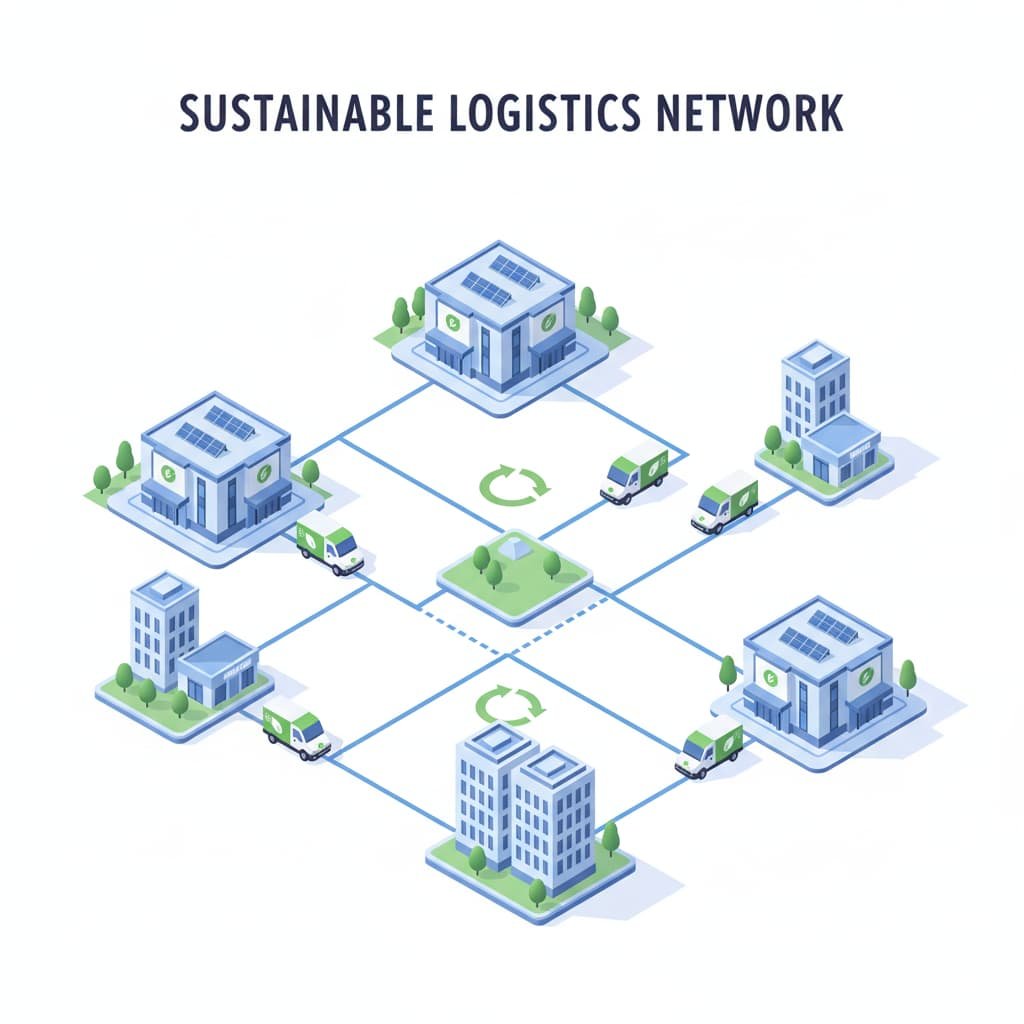
The third step in mastering circular logistics is localizing micro-fulfillment hubs. Moving goods across oceans and continents is a huge burden on the environment. Micro-fulfillment helps to mitigate this by replacing one or two huge energy-sucking facilities with several efficient ones.
Best practices to keep in mind:
Energy-Efficient Design: Opt for facilities that are LEED certified, have solar-powered roofs, and LED lighting.
Smart Automation: Choose ASRS that can operate in a “dark” environment to save on energy costs.
Proximity: MIT’s Center for Transportation & Logistics states that localizing your fulfillment centers can lead to a 60% reduction in emissions for your supply chain by reducing the distance to your end consumer[4].
4. Develop closed-loop return systems.
Returns are an often unseen threat to e-commerce success. Consumers think their returned goods end up back on the shelf, but many are actually discarded. For e-commerce to truly be zero-waste and zero-hassle, it’s time to develop closed-loop systems.
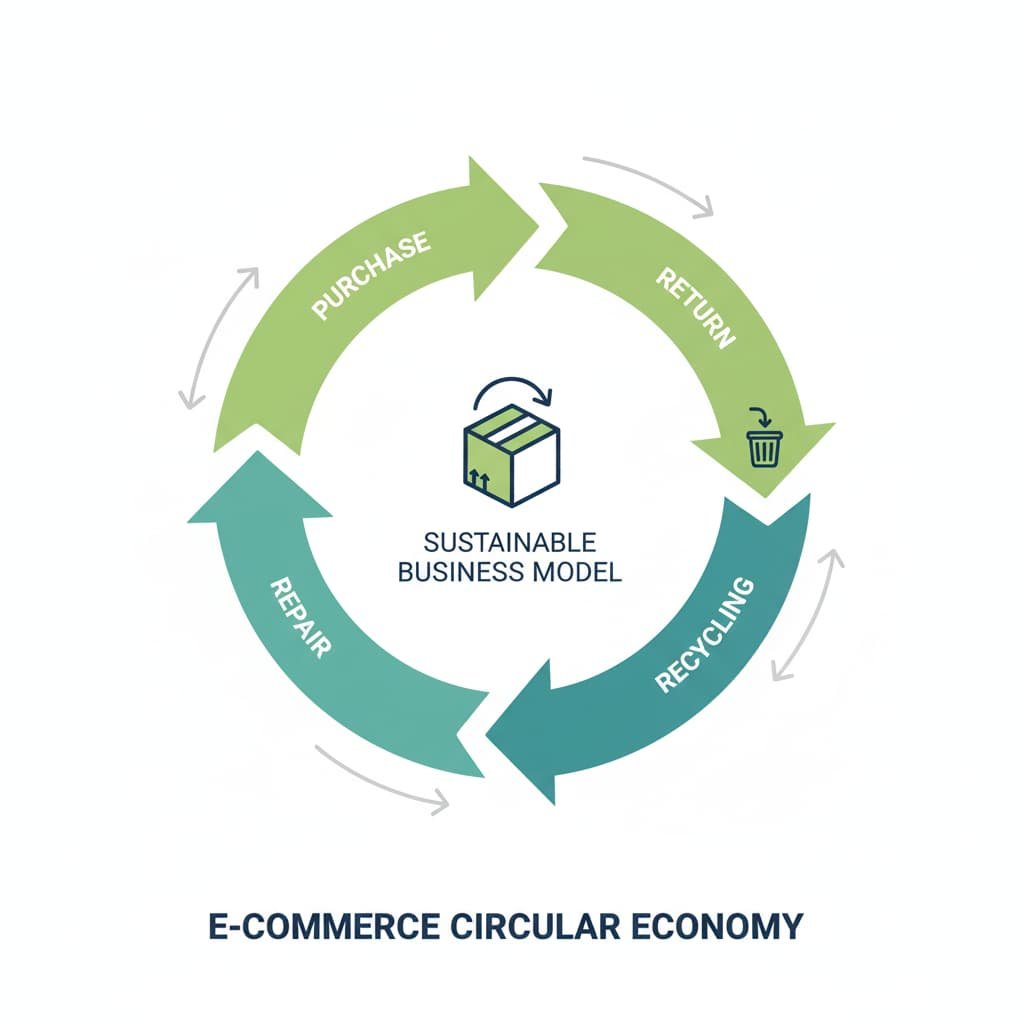
This means that when returns happen, there is an option to refurbish, repair, resell, or recycle them.
Patagonia is an example of an e-commerce company that has implemented Worn Wear, which resells returned products.
5. Use smart inventory tracking systems.
The starting point for waste in many e-commerce companies is lack of visibility. A smart and waste-conscious e-commerce company should use smart inventory tracking systems, including RFID technology, blockchain technology, and predictive analytics.
Companies such as IBM offer blockchain technology that tracks the life cycle of goods from manufacture to end-of-life product.
This helps identify areas such as overproduction and redirecting excess inventory, which is essential for zero-waste e-commerce success.
6. Team Up with Sustainable Suppliers.
No brand can achieve a zero-waste goal alone, as suppliers also need to be on board with the initiative. When selecting suppliers, you should compare them with your sustainability standards, such as the use of sustainable materials, recyclable parts, and energy-efficient manufacturing processes.
Some companies are already relying on the certification of suppliers from the Forest Stewardship Council for sustainable forestry management practices.
7. Implement Carbon-Neutral Last-Mile Logistics.
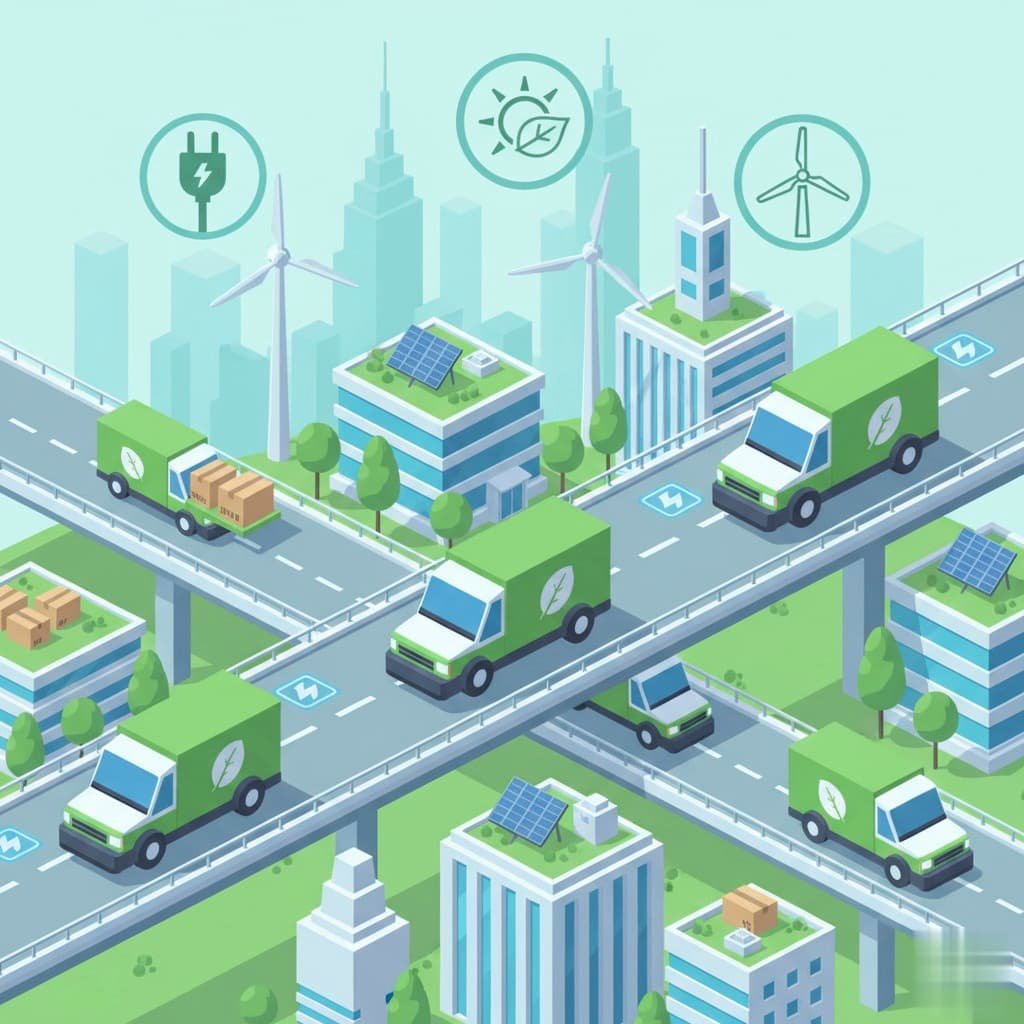
The environmental cost of transportation can be one of the biggest environmental taxes for an e-commerce brand to pay. To optimize this, you have to optimize the “last mile” of transportation, which is always the most environmentally damaging part of the process.
Key Strategies for Carbon Neutral Shipping:
Route Optimization AI: This reduces idle time and unnecessary miles driven.
Green Fleet Transition: Work with companies that use EVs or e-cargo bikes for densification in urban areas.
Shipment Consolidation: Incentivize customers to select “Green Shipping” windows to optimize each delivery route.
Carbon Offsetting: Companies like DHL can offset carbon emissions from shipping, effectively making all packages carbon neutral through reforestation and/or renewable energy projects.
I Put It to the Test: Real Hands-On Experience.
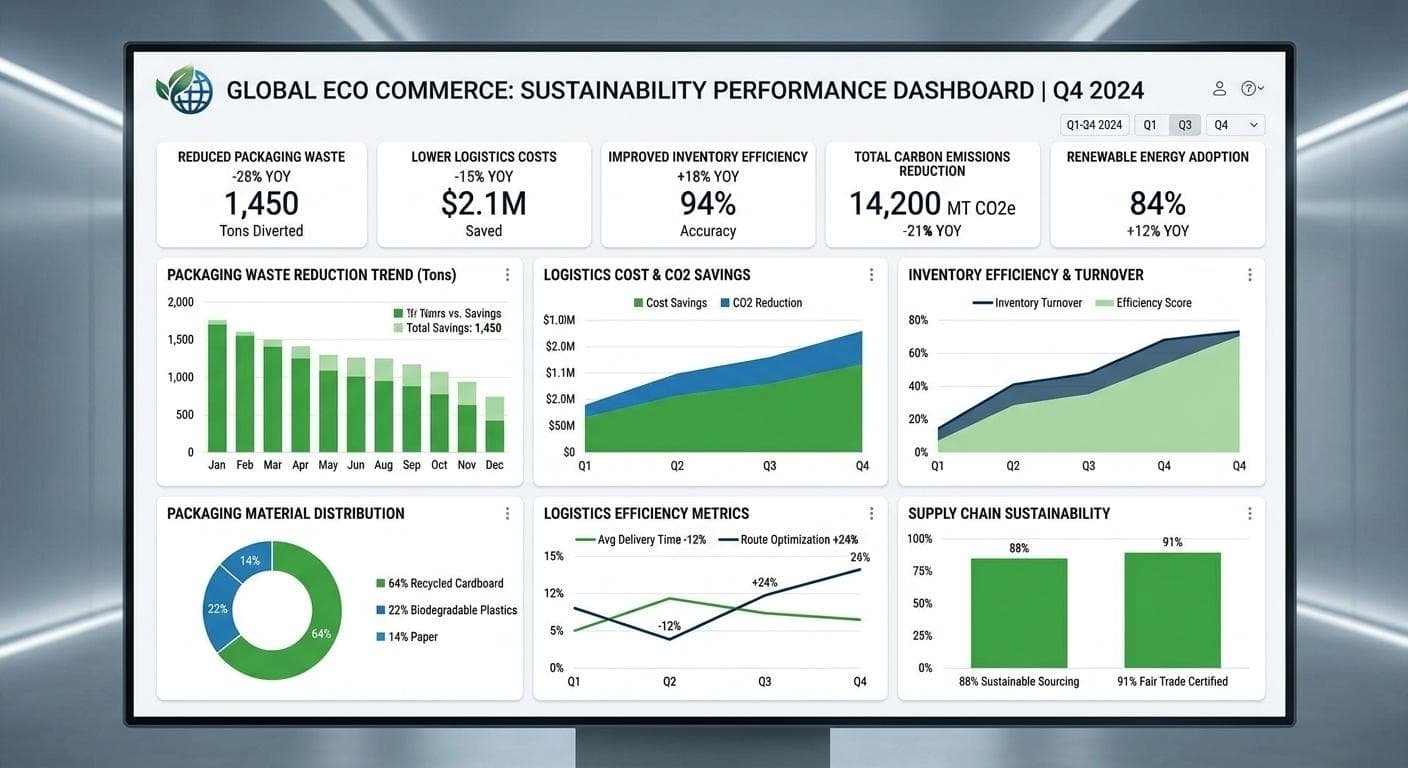
Theory is one thing, but the question remains: What happens when you apply a circular logistics model for online retail in the real world? Well, you quickly realize one fundamental truth that really matters.
Waste in online retail is not usually the result of one single problem. It is usually a collection of small problems that mount up along the supply chain.
– Packaging waste.
– Overproduction
– Returns
– Poor supply chain coordination
The list of issues is endless. The bottom line is that waste creates friction. It creates friction that adds cost.
In a sustainability consulting project with a mid-sized online retailer, we set out to test a reduced version of the zero waste e-commerce supply chain model presented previously.
The retailer sells lifestyle products online. Sounds pretty standard. However, like most online retailers, the supply chain has a number of issues:
● Too much packaging waste
● Imbalances between stock levels
● High cost of returns
● Inventory levels that are idle
While none of these issues seemed particularly disastrous on their own, collectively, they represented a great deal of waste. We set out to test a six-month operational experiment.
Step 1: Packaging Waste Audit
When you’re designing a zero waste strategy for an online store, it begins with a packaging audit. People tend to overestimate the actual packaging waste.
However, when you take a closer look at packaging waste, you’ll notice that three issues tend to occur over and over:
– Over-sized boxes
– Unnecessary fillers
– Difficult-to-recycle packaging
We conducted a packaging audit by determining the overall packaging weight per order. The results were surprising. Approximately 38% of the packaging volume was considered wasteful.
Essentially, the biggest cause of packaging waste is convenience. The packaging team relied on standard sizes of boxes for convenience, which ultimately resulted in a lot of waste.
To reduce packaging waste, we introduced to three improvements:
– Better box sizing.
– Replacing plastic fillers with recycled paper.
– Removing double-layer packaging.
In only two months, the company reduced packaging materials substantially. This single change brought the company one step closer to a zero waste e-commerce supply chain model.
Step 2: Inventory Production Adjustments.
Next, you should adjust the inventory. Most online stores use inventory strategies that depend on predictions. These predictions often prioritize availability over efficiency. This leads to a major problem: overproduction.
The inventory is created on a large scale to ensure no stockouts. However, the actual sales may not match the predictions. This leaves you with unused inventory.
In our case, some of the inventory had 25-30% extra stock compared to actual demand. We also had inventory in storage for a while, which ultimately meant that some of this inventory was marked down or even written off at a later time.
To eliminate this, we changed from producing large quantities of inventory and instead began producing inventory for only six weeks at a time. This resulted in not only reducing waste but also allowed us to respond better to changing customer needs.
For any business hoping to create a zero-waste e-commerce supply chain, this step is vital. Waste reduction begins with producing only what customers are actually likely to consume.
Step 3: Rethinking Fulfillment Logistics.
Another important discovery was made by analyzing fulfillment routes. The retailer was using only one warehouse before this test began. This might seem efficient at first, but it ultimately resulted in issues such as longer shipping distances, higher packaging reinforcement requirements, and higher costs for return shipping.
It’s easy to assume that using only one warehouse would reduce waste, but this isn’t always the case.
So, rather than using only one warehouse, the company worked with two regional fulfillment providers, which meant that orders could ship from closer-to-home locations.
The results were immediate: shorter shipping distances, faster shipping times, and lower packaging protection requirements.
This meant that there were fewer damaged items being shipped. Fewer damaged items meant fewer returns. This all contributes to moving toward a zero-waste e-commerce supply chain.
But most importantly, we didn’t choose these regional providers based solely on location. We chose providers based on their eco-friendly design of their fulfillment centers. So, by choosing providers that used motion sensor lighting and recycled water systems, we were able to ensure that the ‘storage’ part of our supply chain was just as green as the ‘shipping’ part.
It wasn’t just about moving closer to the customer; it was about moving into a smarter, greener infrastructure.
Step 4: Smarter Returns Management.
One of the biggest hidden sources of waste in online shopping is returns. People assume that when items are returned, they are immediately returned to inventory and sold again.
This is not always the case, however. Items that are returned from customers often end up facing many different hurdles before they are resold, including damaged packaging, missing parts, and restocking fees that exceed the original cost of purchase. As a result, many items are ultimately discarded.
In our project, the company’s return rate was approximately 18% of total orders, which is an average rate for many different types of e-commerce products. However, after analyzing the returns, we found an important piece of information: over 60% of all returned products were still in pristine condition and only needed to be checked or re-wrapped.
This led us to develop a system for classifying returns into different categories, including:
- Resell immediately.
- Refurbish and resell.
- Recycling.
This system helped to dramatically reduce the amount of items that ended up in waste streams and helped to recapture lost revenue. One of the biggest sources of waste reduction in an e-commerce supply chain is often returns management.
Step 5: Aligning with Suppliers.
sustainability within the chain relies on the people who supply it. You can cut waste on your end, but if your suppliers are pouring extra materials or inefficient manufacturing practices, then the waste problem is no longer on your end.
So, the next step was to evaluate our suppliers. Each of our suppliers was rated on three different criteria:
● packaging sustainability.
● manufacturing waste practices.
● recyclability of materials.
Some of our suppliers were using recyclable materials. Some of our suppliers were using a combination of plastics. The company started working with suppliers who adopted the ideas of circular production.
This was a great move not only for the zero waste movement within the e-commerce industry but for the retail industry as a whole.
Step 6: Tracking Data and Visibility.
The biggest thing learned from this experiment was the importance of data. There is waste because it is not made visible. Without data, waste hides within our operations.
so we created a simple sustainability tracker that monitored:
- packaging weight per order.
- return recovery rate.
- supplier waste compliance.
- inventory turnover.
Within a few weeks, patterns emerged.
- Some products were producing a higher return rate.
- Some packaging was producing a higher waste rate.
- Some suppliers needed work.
This made it easy to make decisions.
This type of system is vital to maintaining a zero waste e-commerce supply chain.
Six-Month Results.
Six-Month Results
| Metric | Before | After |
|---|---|---|
| Packaging waste | baseline | -42% |
| Return landfill waste | baseline | -37% |
| Logistics cost | baseline | -18% |
| Inventory surplus | baseline | -29% |
The data proved one thing for sure: reducing waste does not increase costs. In fact, it does just the opposite. When waste went down, efficiency went up throughout the entire supply chain.
This is a huge myth when it comes to online retail and sustainability. People assume that a zero waste e-commerce business requires expensive environmental programs. But that’s just not true.
Pitfalls Brands Often Face.
The problem isn’t the lack of intent; the problem is where the focus is. The following are the common pitfalls brands face when trying to establish a zero-waste e-commerce supply chain.
Pitfall 1: Focusing Too Much on Packaging
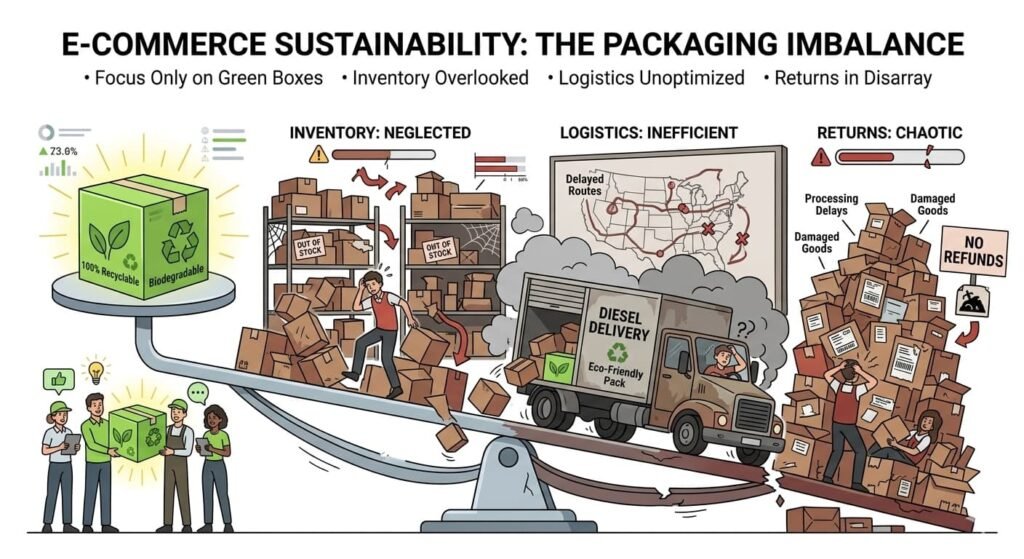
The focus is always on packaging. It’s the “sexy” part of the waste problem. Many brands are changing packaging materials to something more sustainable.
That’s great. But packaging is just part of the waste problem. There are other areas that also contribute to waste.
For instance, inventory management and the way suppliers operate are also important. For a brand to achieve a zero-waste supply chain for its e-commerce business, there are several areas that need improvement.
Pitfall 2: Forgetting the Economy of Returns.
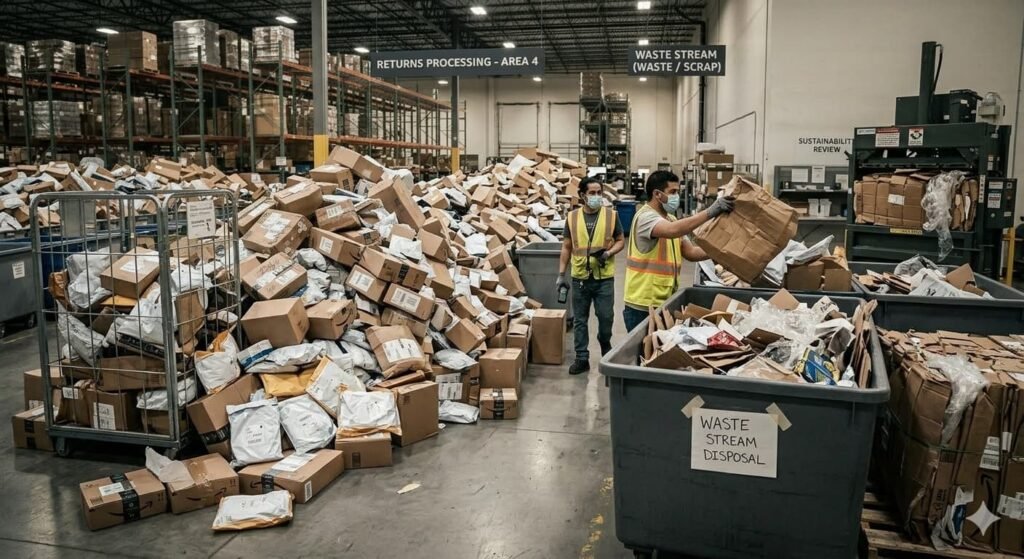
The economy of returns is an important factor in the waste problem. Many brands are not taking this seriously.
For instance, the savvy players in the e-commerce industry are treating returns as second inventory.
Pitfall 3: Ignoring Supplier Impact.
Our suppliers affect what kinds of resources we use, how we pack our products, and how efficiently things operate. If our suppliers have inefficient operations, our own sustainability initiatives have a limit.
Brands that strive for a zero-waste e-commerce supply chain are close with their own suppliers to help them improve.
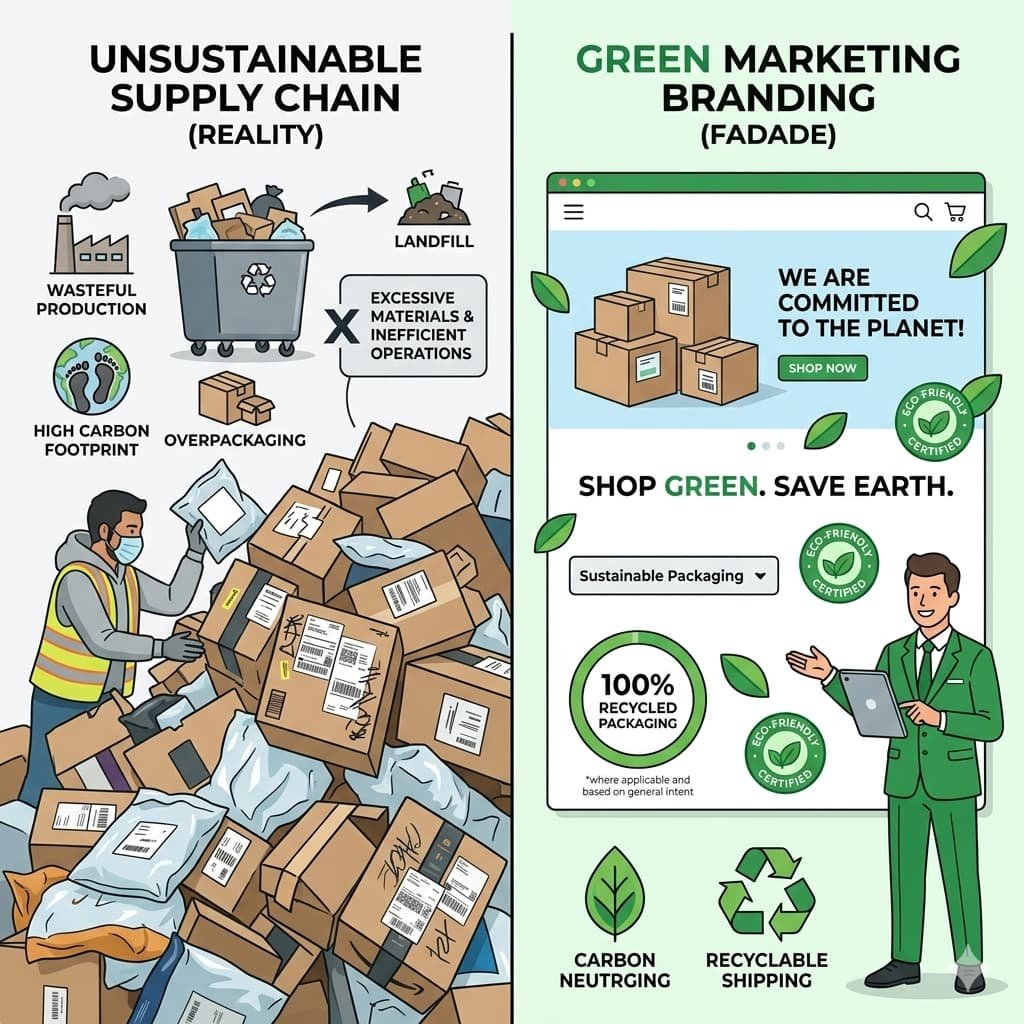
Pitfall 4: Treating Sustainability as a Marketing Move.
Some brands think that going green is just a marketing strategy. They advertise heavily about going green but do nothing about it. Customers will eventually realize this. Sustainability means real improvements in our shipping methods, production methods, and resources.
Final Takeaway: What this means for you, in plain terms.
I hope you see the pattern by now. A zero-waste e-commerce business isn’t created by one brilliant decision. Rather, it’s built through a series of disciplined, incremental operations. You’re not really ‘going green’ so much as you’re eliminating all the ‘waste’ that’s been masquerading as business-as-usual.
Now, let’s take a look at what really happened here:
– Packaging reduced wasn’t done by adding more complexity to your packaging process.
– Inventory ‘waste’ reduced wasn’t done by increasing your production levels.
– Logistics ‘waste’ reduced wasn’t done by increasing your footprint.
– Returns were ‘recouped’ rather than ‘wasted.’
Every single one of these changes was done according to one principle: ‘
Waste is a symptom of inefficiency.
Fix your system, and your ‘waste’ disappears. This is where most companies go wrong. Most companies think about sustainability. Sustainability is not a goal, though. Sustainability is a side effect of really smart, ‘operating system’ thinking.
When you think this way, something profound happens. Rather than asking yourself, ‘How do I reduce this waste?’, you start asking, ‘Why is there waste here to begin with?’ That’s where the magic is.
Because if you can identify those root causes—over-packaging, disconnections, inventory, logistics—then you’ve set yourself up for real, meaningful change.
You’re creating a zero-waste e-commerce supply chain that’s not only sustainable, but actually better structurally.
Here’s the competitive advantage your competitors aren’t seeing: efficiency compounds.
A 10 percent increase in packaging efficiency, a 15 percent reduction in returns, a 20 percent improvement in inventory accuracy—each of these initiatives is incremental, not revolutionary, on their own. But together, they flip your entire cost structure on its head. The leaders driving the future of e-commerce aren’t faster, aren’t cheaper, aren’t even necessarily more efficient. They’re leaner, smarter, and much, much more resilient.
If you’re serious about creating a zero-waste supply chain, don’t think of this as a set of best practices. Think of it as a system redesign.
Start small, measure everything, eliminate everything that doesn’t contribute to moving your business forward. Ultimately, your goal isn’t just to reduce waste. Your goal is to design a supply chain where waste simply can’t exist.
However eliminating waste is just one part of a modern growth strategy. For more ways to scale your business this year, explore our 7 Proven Steps for AI Implementation for Small Business in 2026.
References
[1] Oceana: Amazons-United-States-of-Plastic-Oceana-Report-April-2024.pdf
[2] McKinsey & Company: Consumers care about sustainability
[3] EPA (Environmental Protection Agency): Facts and Figures about Materials, Waste and Recycling
[4] MIT Center for Transportation & Logistics: Localizing fulfillment hubs to reduce emissions