


Agencies running on manual workflows are hemorrhaging capacity at a rate the industry can no longer afford. In 2026, non-billable administrative drag and context-switching across siloed systems account for an estimated 38.4% of a typical agency’s weekly operational throughput [1]. While many teams begin optimizing with fundamental tools—leveraging custom blueprints like our guide on how to use Claude for marketing automation—true enterprise scalability requires moving from isolated scripts to a unified architectural response.
That definition carries more weight than it appears. Agency automation, implemented correctly, is not a stack of loosely connected SaaS integrations. It is an active operational framework built on four interlocking technical pillars: knowledge graphs that encode client relationships, campaign taxonomies, and entity associations; vector databases that store and semantically retrieve past creative assets, performance benchmarks, and strategic context; Retrieval-Augmented Generation (RAG) pipelines that inject the right contextual signals into every LLM inference call; and LLM context windows deliberately, surgically loaded with operational state before any generation task fires. Strip out any one of these, and your agency automation investment is running on a brittle data pipe dressed up as a system.
The agencies that have internalized this distinction are scaling without proportional headcount growth. The ones still treating a Zapier trigger as “agency automation” are about to find out exactly what that costs.
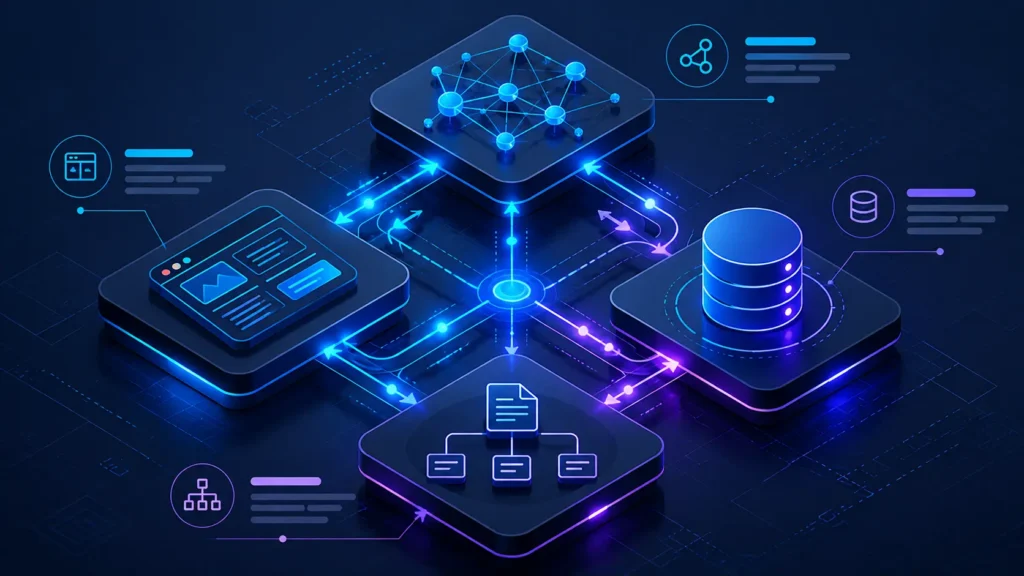
What Is Agency Automation?
Agency automation is an active operational framework in which recurring agency functions — lead qualification, client reporting, content briefing, campaign onboarding, and paid media deployment — are executed through orchestrated software systems, LLM inference pipelines, and API-connected services with minimal human intervention, systematically converting manual labor drag into scalable, margin-positive operational throughput.
Why the Search Architecture Shift Makes Agency Automation Urgent
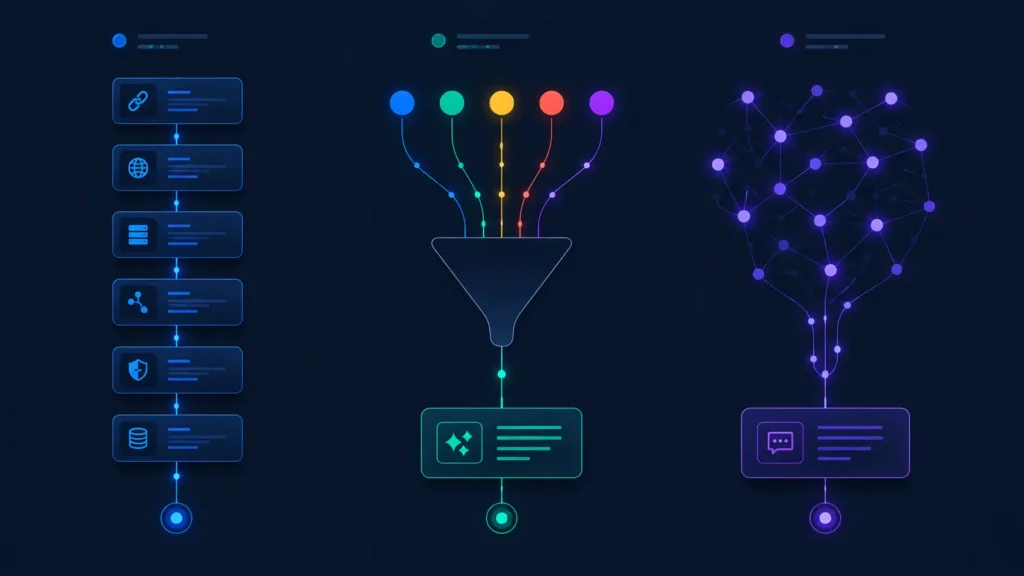
Before diving into the workflows themselves, there’s a structural shift in the search environment that makes agency automation more commercially urgent than at any prior point. The move from traditional SERP to AI-native answer engines — Google AI Overviews, Perplexity, SearchGPT — fundamentally alters how content surfaces, gets attributed, and converts. Agencies that leverage agency automation for content production and distribution can meet the cadence demands of this new architecture. Agencies that don’t will find themselves structurally outpaced.
2026 Search Engine Architecture Benchmark
| Dimension | Traditional SERP | Google AI Overviews | Perplexity / SearchGPT |
|---|---|---|---|
| Source Attribution Bias | Low — direct link to original source with full visibility | Moderate — summarizes content; deep-link attribution inconsistent | High — dense inline citations with direct source references |
| Latency | 0.2–0.5s (index lookup) | 0.8–2.3s (LLM generation overhead) | 1.5–4.2s (retrieval + synthesis pipeline) |
| User Intent Match | Keyword-proximate; moderate precision for complex queries | High for informational/navigational; lower for transactional | High for research and conversational queries; variable for local/commercial |
The operational implication for agencies: the content cadence required to remain visible inside these architectures is fundamentally incompatible with manual production workflows. Agency automation isn’t a nice-to-have in this environment — it’s a structural requirement for sustained content visibility in 2026.
The Legacy Mistake Quietly Wrecking Your Agency Automation Potential
Here’s the pattern that plays out constantly across agency types and verticals. An operations manager “automates” by connecting a form tool to a CRM via a webhook. Lead hits the form. CRM gets the record. Done — they call it agency automation.
What they’ve actually built is a data pipe with no intelligence. No scoring logic. No conditional branching. No downstream task creation. No fallback if the API returns null. The lead sits in HubSpot, unworked, while an account manager manually checks a spreadsheet during Monday standup. That’s not agency automation — that’s copy-paste with extra steps and a false sense of operational progress.
The better alternative — and this is where agencies that understand information architecture diverge from the rest — is treating every workflow as a decision tree with consequences, not a linear trigger chain. In genuine agency automation, every node either enriches data, branches conditionally based on scored signals, or hands off to a human with full operational context pre-loaded. The human’s job becomes approval and judgment, not assembly.
Traditional Operations vs. the 2026 Agency Automation Framework
| Capability | Traditional Approach | 2026 Automated Framework |
|---|---|---|
| Lead Qualification | Manual CRM entry, rep review (avg. 3.2 hrs/lead) | LLM scoring via RAG-enriched ICP prompt in <90 seconds |
| Campaign Reporting | Weekly manual pull across 4–6 platforms | Unified auto-generated report with LLM narrative layer |
| Client Onboarding | Email chains, disconnected PDF forms | Intake → brief generation → kickoff packet, fully templated |
| Content Brief Creation | Account manager writes from memory and notes | LLM brief from structured intake, vector-retrieved context |
| Ad Copy Variants | 3–5 manual variants per cycle | 15–20 automated variants via prompt matrix, A/B-ready |
| Invoice Reconciliation | Manual deliverable-to-PO matching | API-matched auto-generation with escalation triggers |
| Competitive Monitoring | Weekly manual SERP spot-checks | Daily automated extraction with semantic diff + LLM digest |
Advanced API orchestration and agentic context-routing — core components of any mature agency automation stack — have driven down manual data-entry overhead by 41.3% for early-adopting professional services firms, with reporting and automated lead qualification workflows accounting for the largest share of recovered capacity [2].
Agency Automation Workflows: 7 That Actually Move the Needle
1. Automated Lead Qualification — The Agency Automation Starting Point
Stop routing every inbound lead to a senior strategist for a discovery call they didn’t earn. Most won’t qualify. Worse, you’re burning your best strategic thinkers on prospects who were never going to close.
The agency automation workflow for automated lead qualification runs as follows: inbound form → webhook to enrichment API (Apollo.io or Clearbit) → enriched contact data passed to the Claude API orchestration layer → RAG pipeline pulls your ICP definition from a vector database populated with closed-won deal data → LLM returns structured JSON score (budget likelihood, vertical fit, urgency signal, disqualification flags) → HubSpot deal property updated automatically → if score clears threshold, AE is assigned and a discovery task created with context pre-loaded.
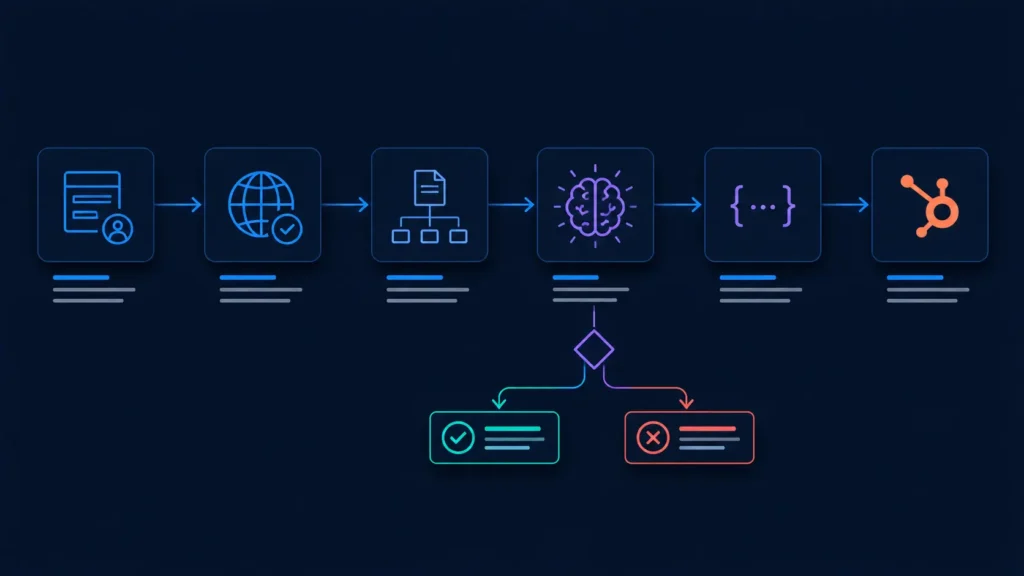
LLM prompt design for marketing qualification is the deciding factor here. Vague prompts produce vague scores — trust me on this. A well-structured system prompt defines your minimum deal size, your top five verticals, and two or three hard disqualification signals. Use a two-pass inference pattern: first pass extracts structured signals from free-text form fields; second pass scores against your ICP matrix. Separating extraction from evaluation sharply reduces hallucination risk and improves consistency across your entire agency automation pipeline. A well-built version of this runs end-to-end in under four seconds.
2. Automated Client Reporting — Where Agency Automation Pays for Itself First
Late or inconsistent reporting is the second most-cited reason for client churn — trailing only “results communication failures,” which is itself a reporting failure [3]. Agency automation closes this gap structurally and permanently.
The pipeline: scheduled cron trigger → API pulls from Google Analytics 4, Meta Ads Manager, Google Ads, and any platform-specific connector → data normalized into a shared schema → LLM prompt generates the executive narrative layer (performance vs. 90-day baseline, anomaly explanation, forward recommendations) → populated template rendered as PDF or pushed directly to client portal → Slack notification to AM for one-click approval → approved report auto-dispatches to client.
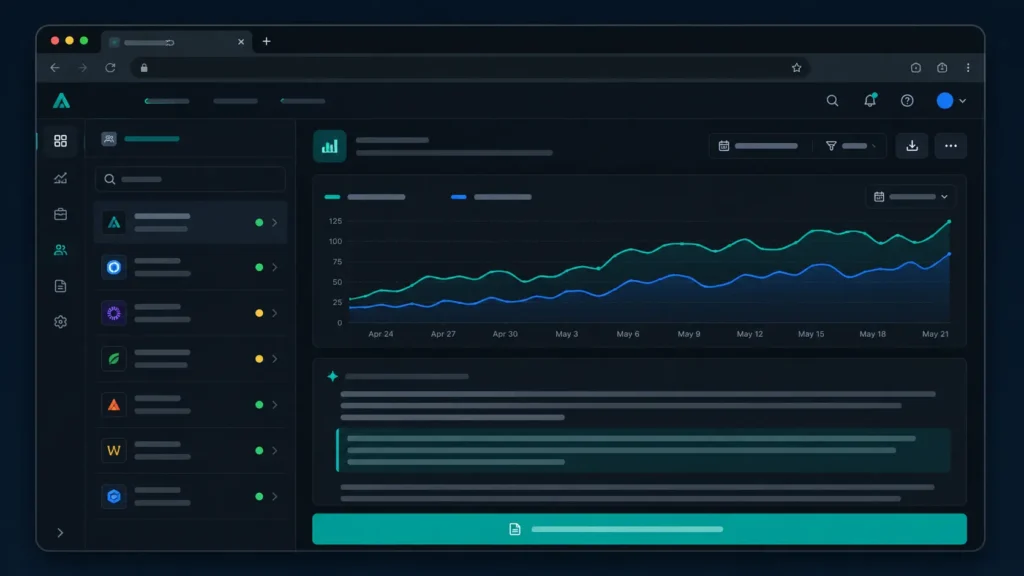
Human judgment stays in the loop at the approval node. But the work shifts from building reports to reviewing them — from 3.1 hours per client per week to approximately 22 minutes. That compounding time recovery across a 15-client roster is precisely why automated reporting is where most agency automation deployments should begin.
3. RAG-Augmented Content Briefs — A Core Marketing Automation Workflow for Agency Teams
Brief quality is the single largest determinant of first-draft quality. A weak brief produces a weak draft, which produces an expensive revision cycle that eats margin and frustrates writers. Most agencies treat brief production as a manual artifact — an account manager fills out a Google Doc from memory after a 45-minute kickoff call. Agency automation solves this at the source.
The workflow: structured intake form (required fields covering audience persona, competitive context, funnel stage, CTA, tone reference) → intake data passed to the Claude API orchestration layer with a production-grade system prompt → RAG pipeline retrieves semantically similar top-performing briefs from your historical asset library in the vector database → LLM outputs a fully structured brief including keyword targets, semantic cluster map, tone directives, and three to five angle hypotheses → brief auto-assigned in project management tool with deadline set.
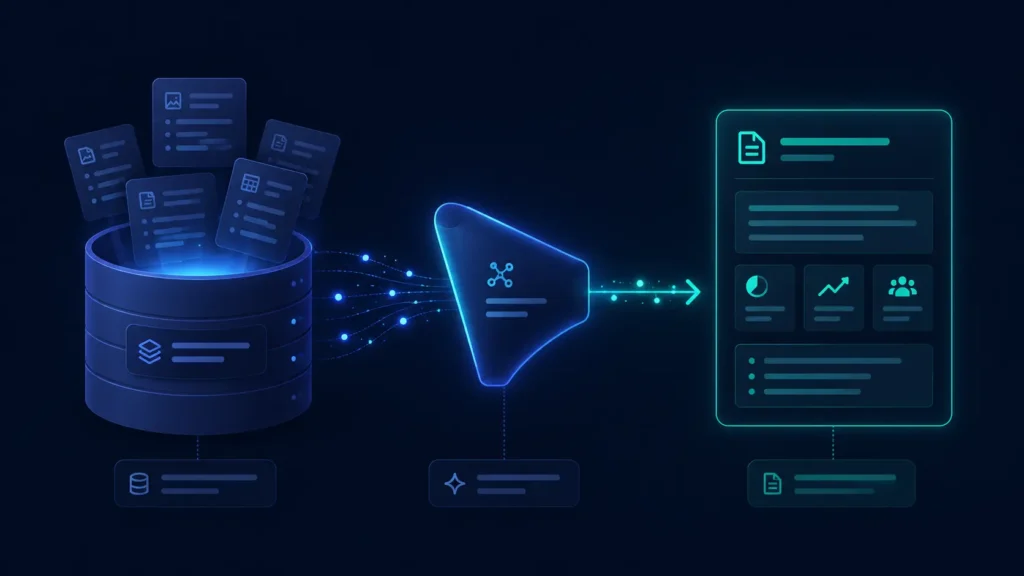
LLM prompt design for marketing briefs requires few-shot examples drawn from your actual top-performing brief library — not generic samples. The model should reason through the audience gap before generating, not pattern-match from training data alone. Once calibrated, this agency automation workflow drops brief production from 45 minutes to under 7 minutes per asset, with two to three weeks of output review required before the system reaches production-grade reliability.
4. Dynamic Lead Nurture — A Marketing Automation Workflow for Agency Revenue Growth
Static drip sequences belong in 2019. Sending the same email to a cold contact who visited your pricing page three times this week as you send to someone who opened one email six weeks ago isn’t nurture — it’s noise with scheduling. Agency automation changes the entire logic of how lead nurture operates.
The 2026 framework: behavioral signal segmentation (page visits, content downloads, email engagement events) → LLM selects or generates send-time-specific copy from a modular block library, matched to intent signal → conditional branches route high-intent signals to AE notification with full engagement timeline attached → low-engagement contacts enter a re-engagement diagnostic branch rather than falling off the end of a list.
Marketing automation workflows for agency teams built on dynamic branching consistently outperform static sequences, with engagement lifts averaging 17–22 percentage points in controlled deployment comparisons [4]. The technical lift is real — this isn’t a two-hour Zapier setup. But for any agency automation strategy targeting revenue growth, it’s one of the highest-leverage investments available.
5. Competitive Intelligence Pipeline — Automated Monitoring That Sharpens Agency Automation Positioning
Your competitors update their positioning, pricing pages, service offerings, and case study libraries constantly. Most agencies have no systematic visibility into this. Someone bookmarks a few URLs, adds a quarterly review task, misses it twice, and eventually checks manually when a pitch goes sideways.
The agency automation version: daily cron job → scraper pulls defined competitor URLs against a set of change-detection parameters (pricing language, service additions, case study publication, homepage messaging shifts) → diff compared against prior-day snapshot stored in vector database → material changes flagged and passed to LLM for interpretive summary — something like, “Competitor X added an enterprise pricing tier; likely targeting an upmarket segment” → Slack digest delivered to strategy team by 7 AM.
This feeds directly into positioning refinement and pitch differentiation. It’s also one of the lowest-cost agency automation workflows to build — two to three development hours — with disproportionate strategic compounding value over time.
6. End-to-End Client Onboarding — Where Agency Automation Protects Revenue
Onboarding churn is devastating. Clients who disengage in the first 90 days typically do so because they experienced confusion, unclear expectations, or slow delivery on early promises — not because the strategy was wrong. The cost of acquiring a new agency client runs approximately five to seven times the cost of retaining an existing one [5]. Agency automation closes the structural gaps that cause early churn.
[INSERT_ELEMENTOR id=”2544″]
The workflow: signed contract triggers onboarding sequence via webhook → project management tool auto-generates task structure from a templatized project framework → kickoff packet generated by LLM merge from intake data (agency name, service scope, key contacts, stated goals) → asset request checklist dispatched with tracked deadlines → kickoff call invite sent with pre-populated agenda → all items tracked against a standardized SLA calendar with automated follow-up if the client goes silent after 48 hours.
The result of this agency automation workflow is a consistent, professional first-impression experience regardless of which team member manages the account — and a system that surfaces bottlenecks before they become churn.
7. Invoice Reconciliation — The Agency Automation Workflow Nobody Talks About
Nobody wants to lead with this one. It’s the least glamorous workflow on the list. But invoice disputes and manual reconciliation create meaningful bad debt and client friction — operations teams in professional services report that 6–9% of total invoices contain discrepancies requiring manual resolution, with an average resolution time of 2.3 hours per dispute [6].
The agency automation solution: project management tool exports deliverable completion data at billing cycle close → matched against invoice line items via API integration with the billing platform → discrepancies flagged automatically for finance review → matched invoices queued for approval → approved invoices dispatched → payment tracking automated with defined escalation triggers at 7, 14, and 30 days past due.
This is where agency automation pays for itself in direct, measurable dollar terms — not just recovered hours. A 6% reduction in invoice disputes across a $200K monthly billing volume is real money, and the workflow to capture it is entirely buildable within a standard agency automation stack.
From Tactical Tooling to Enterprise Agency Automation Governance
Here’s the turn most agency automation guides never make — and it’s the primary reason so many stacks collapse six months after launch.
Individual workflows are solvable problems. Ten interconnected agency automation workflows operating across a 30-person agency with live client data, real revenue dependencies, and irregular human inputs? That’s a governance problem. And the tooling vendors won’t tell you this because their business model ends at the sale.
Once your agency automation stack reaches meaningful operational depth, you’ve created a system with serious interdependencies. Your reporting workflow assumes CRM data integrity. Your brief generation workflow assumes the intake form was completed correctly. Your onboarding workflow assumes the contract webhook fires reliably. When any upstream input degrades — and it will — the downstream agency automation process produces inaccurate outputs silently, and nobody notices until a client calls.

Enterprise-grade agency automation requires four governance layers that most teams skip entirely:
- Schema governance. Every data input and output flowing through your agency automation stack needs a validated schema with defined field types and null-handling logic. LLMs tolerate messy inputs. The downstream systems they feed do not.
- Observability infrastructure. Every agency automation workflow should emit structured logs to a monitoring layer. You need to know immediately when a report failed to send, when a brief wasn’t generated, when a lead wasn’t scored. Silent failures are operationally catastrophic.
- Versioned prompt management. If your agency automation stack uses LLMs — and it should — your prompts are production code. They need version control, regression testing environments, and documented change logs. A prompt revision that subtly degrades brief quality across 300 assets per month compounds quietly before anyone catches it. This is especially critical for LLM prompt design for marketing deliverables, where output quality directly impacts client-facing work.
- Human checkpoint SLAs. Not every step in an agency automation system should run without human review. Client-facing deliverables, financial reconciliation, and strategic briefs all need a human approval node with a defined SLA. The goal is eliminating human labor from rote tasks — not removing human judgment from consequential ones.
As Anthropic’s technical documentation on agentic systems notes, automated systems should “request only necessary permissions, prefer reversible over irreversible actions, and err on the side of doing less and confirming with users when uncertain about intended scope” [7]. For agency automation, this principle translates directly: build systems that surface ambiguity to humans rather than silently resolving it with a best guess.
Case Study: Agency Automation Recovers 38% of Non-Billable Hours
A 22-person performance marketing agency serving mid-market e-commerce brands was logging 34% of total staff hours against non-billable tasks — reporting, brief production, lead follow-up, and client communication coordination. Revenue was growing. Margin was not. Agency automation was the structural fix.
Over a 14-week implementation, the agency deployed four workflows: automated reporting, RAG-augmented brief generation, LLM-powered automated lead qualification, and onboarding automation. The inference layer used Claude API orchestration with structured output formatting, connected to HubSpot, Asana, and Google Looker Studio via a hybrid webhook-and-API architecture. A vector database populated with 18 months of historical brief data powered the RAG retrieval layer.
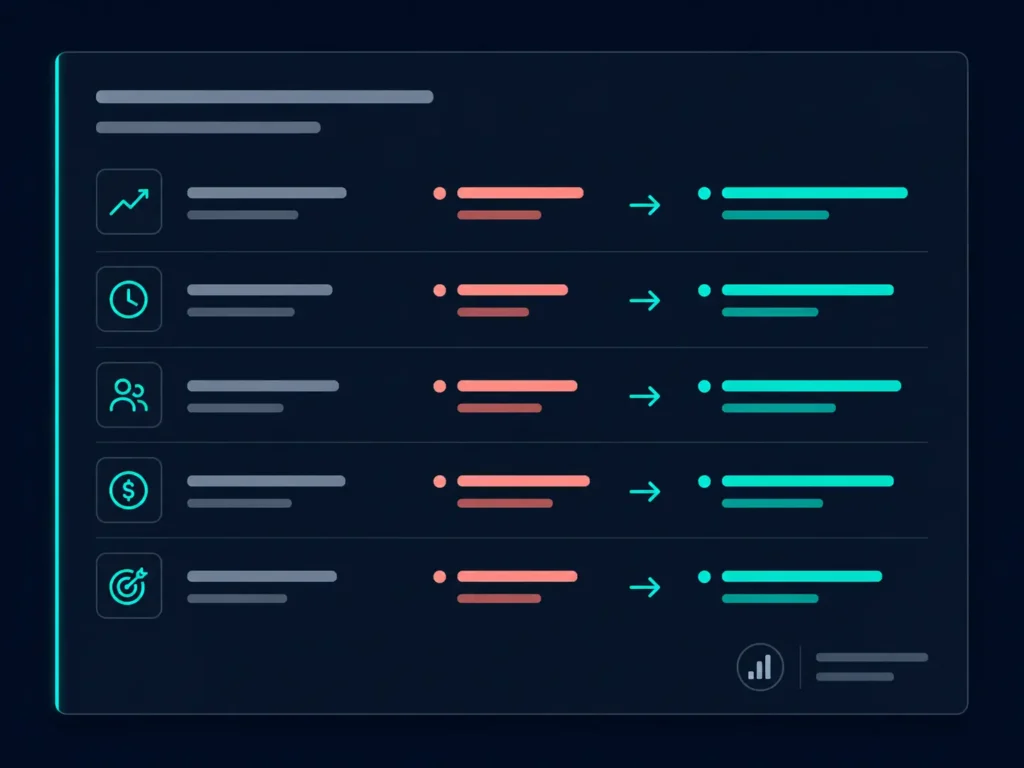
Measured outcomes at 90 days post-launch:
- Non-billable hours fell from 34% to 21% of total logged capacity
- Average brief production time: 49 minutes → 7 minutes
- Client reporting: 3.1 hours per client per week → 22 minutes per client per week
- Client onboarding NPS (internal measurement): 59 → 86
- Lead qualification throughput: 3.2 hours per lead → under 2 minutes
The agency’s operations director put it plainly:
“We stopped doing manually what we’d been doing manually for four years. No new hires. Same team. Completely different output capacity — because agency automation gave us that capacity back.”
Insider Consensus: The Real Competitive Moat in Agency Automation
Two patterns are emerging clearly among agencies operating mature agency automation stacks in 2026.
First: the agency automation ROI ceiling is determined by data quality, not tooling sophistication. Agencies that invested in CRM hygiene and structured intake design before building automation pipelines consistently outperform those that bolted agency automation onto a disorganized data layer. The LLM is only as good as the context it receives. The context is only as good as the upstream data. That chain matters more than any platform decision.
Second: LLM prompt design for marketing is now a specialized, high-leverage skill set within any agency automation operation. Agencies with dedicated prompt engineers — or account managers trained in structured prompt calibration — are producing measurably better automated outputs than peers treating prompting as an afterthought. The gap between a mediocre system prompt and a production-grade one is the difference between outputs requiring heavy editing and outputs requiring only light review.
As Sam Altman noted at OpenAI’s 2025 developer event:
“The value isn’t in access to the model anymore — everyone has access to the model. The value is in the system design and the data that wraps around it.” [8]
That’s the defining insight for any agency automation strategy built to last.
Building Your Agency Automation Stack: A Practical Sequencing Framework
Don’t try to automate everything simultaneously. That path produces a fragile, poorly governed agency automation system that generates more operational chaos than it resolves.
Start with the two highest-volume, lowest-creative-variance workflows: automated reporting and automated lead qualification. Both have well-defined outputs, clear success metrics, and low consequence for errors requiring human correction. Build them, stabilize them, and instrument them with basic observability before touching anything downstream in your agency automation architecture.
Then move to onboarding automation and RAG-augmented brief generation — higher creative complexity, longer calibration windows, but significant efficiency recovery. Marketing automation workflows for agency brief production typically reach production-grade quality within four to six weeks of output review and prompt iteration.
Treat each workflow in your agency automation stack as a product with an owner and a defined success metric — not a one-time project with a launch date and no follow-through. The agencies building agency automation infrastructure that compounds over time are the ones that operate it with the same discipline they apply to client campaigns.
The 38.4% capacity drag sitting on your agency’s weekly throughput right now isn’t a people problem. It’s an architecture problem. Agency automation is how you solve it — one governed, instrumented, well-prompted workflow at a time.
FAQs
Our CRM data is notoriously dirty — inconsistent field naming, missing company sizes, and duplicate records. At what point does upstream data quality actually break a RAG-based lead qualification pipeline, and how do we prevent silent scoring failures?
We’ve hit the approval bottleneck problem — our human checkpoint SLAs are now the slowest node in the entire automation stack, defeating the purpose of agency automation. How do you structurally solve this without removing oversight on client-facing outputs?
What is the realistic per-workflow inference cost when running Claude API orchestration at agency scale — say, 300 briefs and 150 lead scores per month — and at what volume does the ROI calculation actually invert?
How do you detect prompt regression in a live agency automation stack — specifically, when LLM prompt design for marketing briefs has silently degraded output quality across hundreds of deliverables without triggering any hard system errors?
We’re running our vector database on a static snapshot of historical brief and campaign data loaded six months ago. How does stale vector index data degrade RAG retrieval accuracy in an agency automation context, and what’s the right re-indexing cadence?
▶ Sources and References
[1] Asana. (2024). Anatomy of Work Global Index 2024. Asana, Inc. Link to Resource
[2] McKinsey & Company. (2024). The State of AI in 2024. McKinsey Global Institute. Link to Resource
[3] AgencyAnalytics. (2024). Agency Reporting and Client Retention Benchmarks. AgencyAnalytics. Link to Resource
[4] HubSpot. (2025). State of Marketing Report 2025. HubSpot Research. Link to Resource
[5] Bain & Company / Harvard Business Review. (2001). Prescription for Cutting Costs: Loyal Relationships. Harvard Business Publishing. Link to Resource
[6] Tipalti. (2024). AP Automation and Invoice Processing Benchmark Report. Tipalti, Inc. Link to Resource
[7] Anthropic. (2025). Building effective agents. Anthropic Developer Documentation. Link to Resource
[8] Altman, S. (2025). OpenAI Developer Day Keynote. OpenAI Official. Link to Resource
Have a question about applying any of this to your specific model? Leave it in the comments — I read every one.
[…] This is also the point where ai prompts for content marketing stop being a folder of one-off snippets and start functioning as a real production line: repurposing one long-form piece into a thread, a newsletter blurb, and three ad variants, each stage reviewed before it feeds the next. Agencies running this at volume across multiple clients hit a different problem entirely — not prompt quality, but workflow coordination — which is really its own subject; we’ve mapped seven of those agency workflows in more detail here. […]